If you are wondering what it’s really like to live in Georgetown, DC, the short answer is this: it feels historic, walkable, and lively, with a daily rhythm that changes fast from block to block. You may be drawn to the waterfront, the architecture, or the convenience of having restaurants and shopping close by, but it helps to understand how the neighborhood actually functions once the visitors go home. This guide will walk you through Georgetown’s street life, housing, transit, outdoor spaces, and everyday tradeoffs so you can decide whether it fits the way you want to live. Let’s dive in.
Georgetown feels different by block
One of the most distinctive things about Georgetown is how quickly the atmosphere shifts. Along M Street and Wisconsin Avenue, you get a busy commercial core filled with shopping, dining, and steady foot traffic. Just a few blocks away, especially north of M Street, the feel becomes much quieter and more residential, with historic homes and small parks shaping the experience.
That contrast is a big part of daily life here. You can enjoy access to one of DC’s most active neighborhood centers while still living on streets that feel calmer and more tucked away. Georgetown began as a tobacco port town in 1751, long before the federal district existed, and that long history still shows up in the neighborhood’s layout and character, according to the Georgetown BID.
Shopping and dining are central
If you want a neighborhood where errands, coffee, dinner, and window shopping can all happen on foot, Georgetown stands out. The Georgetown BID describes M Street as the neighborhood’s main commercial corridor and one of the best shopping streets in the country. The area is also described as the region’s largest outdoor shopping district, with more than 150 clothing and fashion stores and over 100 restaurants.
The center of activity is the intersection of M Street and Wisconsin Avenue. From there, retail extends into side streets and nearby pockets like Book Hill and Cady’s Alley. In practical terms, that means your day-to-day experience can include everything from quick takeout to destination dining without leaving the neighborhood.
Outdoor dining is also part of Georgetown’s everyday streetscape. In its 2023 retail review, the BID reported that more than 40 restaurants offered alfresco dining on M Street, Wisconsin Avenue, and nearby side streets. That helps explain why the neighborhood often feels active and social, especially in warmer months.
Evenings are active but not club-focused
Georgetown has plenty to do at night, but the mood is different from neighborhoods built around a major nightlife strip. Based on the BID’s examples, evenings tend to center on dinner, jazz, cocktails, and seasonal events like Georgetown GLOW and the French Market. For many residents, that creates a more polished and relaxed feel than a late-night party scene.
The waterfront adds another layer to evening life. Washington Harbour brings riverside dining and seasonal programming, including what the BID describes as the city’s largest outdoor ice skating venue in winter. If you like neighborhoods that stay lively after work without feeling dominated by nightlife, Georgetown may strike the right balance.
Housing is historic and highly regulated
Georgetown’s housing stock is one of its biggest draws, but it also comes with responsibilities. The Georgetown Historic District, created in 1950, was the first historic district in Washington and the sixth in the United States. It is also a National Historic Landmark.
That status matters if you plan to buy here. Exterior work is subject to preservation review, and even minor changes that are not visible from public space can require review under the district’s rules. In other words, Georgetown tends to feel like a preserved historic district first, and a flexible renovation environment second.
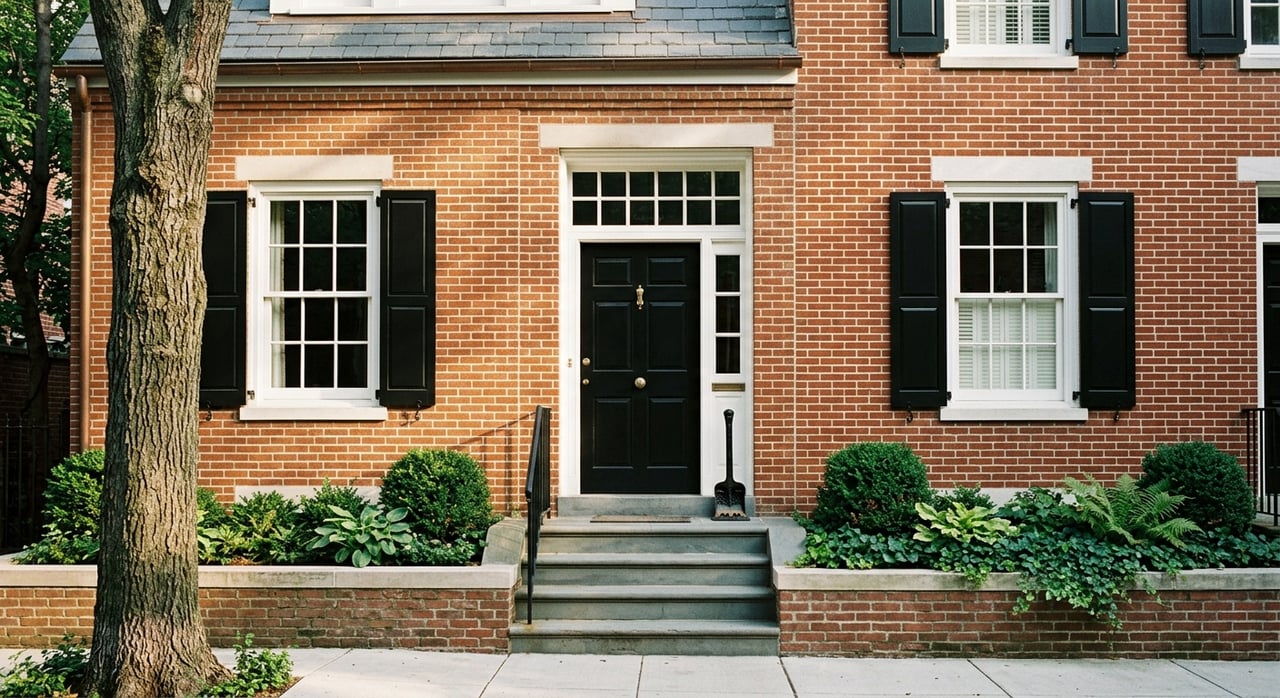
Architecturally, the neighborhood includes Georgian, early Federal, and Classical Revival styles, with repeated use of wood, brick, and cast iron. According to the historic district nomination materials, buildings rarely exceed three stories. On residential streets, the Georgetown BID says homes range from modest row houses to large estates, which helps create variety within a consistent historic setting.
Georgetown real estate comes at a premium
Living in Georgetown usually means paying for location, architecture, and walkability. Zillow reported an average Georgetown home value of $1,513,783 as of March 31, 2026. Realtor.com reported a median home sale price of $1.95 million and a median rent of $5,225 in February 2026.
Those figures are measured differently, but together they point to the same takeaway: Georgetown is a premium market. If you are comparing neighborhoods, it helps to think about whether the historic setting, central location, and walkable lifestyle justify the price point for your goals.
Transit works, but rail is not at your doorstep
One of Georgetown’s best-known tradeoffs is transit. The neighborhood still does not have its own Metrorail station. According to the Georgetown BID FAQ, the closest rail options are Foggy Bottom-GWU, about a 15-minute walk away, and Rosslyn, a short walk across Key Bridge.
That does not mean Georgetown is hard to navigate, but it does mean your commute may rely more on buses, walking, biking, or a mix of options. WMATA’s current route list includes the C91, D80, and D82 routes, which connect Georgetown to places like downtown, Union Station, and Foggy Bottom. WMATA also launched its Better Bus Network Redesign on June 29, 2025, so current service reflects the newer bus network rather than the old Circulator-based setup.
For some residents, this is a manageable compromise because the neighborhood is so walkable. For others, especially if direct rail access is a top priority, it may be a meaningful drawback.
Walking and biking are part of daily life
Georgetown works especially well if you like getting around on foot or by bike. Georgetown University notes that the area is accessible by walking and biking, and those modes are a major part of the neighborhood’s appeal.
One of the biggest assets is Georgetown Waterfront Park, which runs from 31st Street NW to Key Bridge and includes a car-free path for cyclists, skaters, and pedestrians. The park also connects to a much larger network along the Potomac. If your ideal daily routine includes morning runs, evening walks, or bike access beyond the neighborhood, Georgetown delivers more than many historic urban areas do.
The Capital Crescent Trail is another key draw, extending from Georgetown to Bethesda. That gives the neighborhood a strong recreation and commuting advantage for residents who want active transportation options.
The waterfront shapes everyday living
For many people, the waterfront is what makes Georgetown feel special. Georgetown Waterfront Park offers 10 acres of recreation space, including a large fountain, while also linking to 225 miles of parkland along the Potomac, according to the National Park Service. That access creates a daily connection to open space that can be hard to find in a dense urban setting.
The C&O Canal adds another layer of both history and recreation. Its 184.5-mile towpath begins at Mile 0 near Thompson’s Boat House and remains a popular route for running and cycling. Canal boat tours are currently on hiatus while the National Park Service completes restoration and maintenance work, but the corridor still plays a major role in how the neighborhood feels.
Nearby green spaces also include Dumbarton Oaks Park, Montrose Park, and Francis Scott Key Park. These spaces help balance Georgetown’s dense commercial areas with quieter places to walk, sit, or recharge.
History is part of the neighborhood experience
In Georgetown, history is not tucked away behind museum walls. It is part of the streets, homes, gardens, and public spaces you pass every day. That gives the neighborhood a layered atmosphere that feels different from newer parts of DC.
Several cultural sites reinforce that identity. Tudor Place sits on 5.5 acres and holds more than 18,000 decorative objects, while the Old Stone House is identified by the National Park Service as the oldest structure on its original foundation in Washington, DC. Georgetown BID also highlights Dumbarton House and Dumbarton Oaks as part of the neighborhood’s collection of historic house museums.
For residents, that often translates into a strong sense of place. If you value architecture, gardens, and visible local history, Georgetown offers those in a way that feels woven into daily life rather than added on.
Who Georgetown tends to suit best
Georgetown tends to work well for buyers and renters who want a historic, highly walkable neighborhood with strong access to shopping, dining, and the waterfront. It can be an especially appealing fit if you work downtown, in nearby Northwest DC, or in close-in Virginia and want a location with both energy and charm.
It may also suit you if you enjoy an active lifestyle. The neighborhood supports running, biking, walking, and spending time outdoors in a way that complements its urban setting. If you like the idea of stepping out for coffee, dinner, errands, or a waterfront walk without getting in the car, Georgetown checks a lot of boxes.
At the same time, there are clear tradeoffs. The cost of living is high, bus-based commuting matters more than in rail-served neighborhoods, and preservation rules can limit how easily you make exterior changes to a property. For the right buyer, those are worthwhile compromises. For others, they may be a reason to explore nearby neighborhoods instead.
Final thoughts on Georgetown living
Living in Georgetown often means choosing character, walkability, and historic surroundings over convenience factors like a neighborhood Metro stop or easy renovation flexibility. For many buyers, that trade feels well worth it because the neighborhood offers such a distinct mix of architecture, retail, dining, culture, and waterfront access.
If you are considering Georgetown, it helps to look beyond the postcard version of the neighborhood and think about how you would actually move through daily life here. The right fit comes down to your budget, commute, lifestyle, and comfort with historic-home ownership. If you want help thinking through Georgetown or comparing it with other close-in DC neighborhoods, Laurie Rosen would be glad to help you make a smart, well-supported decision.
FAQs
What is daily life like in Georgetown, DC?
- Daily life in Georgetown usually combines busy commercial streets around M Street and Wisconsin Avenue with quieter residential blocks north of M Street, plus easy access to dining, shopping, parks, and the waterfront.
Is Georgetown, DC walkable for daily errands?
- Yes. Georgetown is highly walkable, especially if you want to reach restaurants, shops, coffee spots, and outdoor spaces on foot.
Does Georgetown, DC have a Metro station?
- No. Georgetown does not have its own Metrorail station, so residents often rely on nearby stations, bus service, walking, biking, or driving.
Are Georgetown, DC homes historic?
- Many are. Georgetown’s housing is shaped by the Georgetown Historic District, and ownership often comes with preservation review requirements for exterior work.
Is Georgetown, DC expensive to live in?
- Georgetown is considered a premium market, with high home values and rents compared with many other DC neighborhoods.
Who should consider living in Georgetown, DC?
- Georgetown may be a strong fit if you want a historic, walkable neighborhood with dining, shopping, and waterfront access and are comfortable with the area’s price point and transit tradeoffs.