If you are getting ready to sell a historic home in Georgetown, the goal is not to make it look new. It is to help it look beautifully cared for, authentic, and easy for buyers to understand. In a neighborhood where original details are part of the appeal, the right prep can highlight character, avoid costly review issues, and strengthen your first impression online and in person. Let’s dive in.
Why prep matters in Georgetown
Georgetown is not just another high-end neighborhood. The Georgetown Historic District was created in 1950, making it the first historic district in Washington and the sixth in the United States, with roughly 4,000 primary buildings dating from about 1751 to 1950.
That history shapes how buyers see value. Federal, Greek Revival, Italianate, Queen Anne, Romanesque, and Classical Revival details are not side notes here. They are often part of what makes a home memorable.
Presentation still matters, even in a premium market. Redfin’s March 2026 Georgetown housing data shows a median sale price of $1.65 million, a median 57 days on market, a 98.8% sale-to-list ratio, and 20.4% of homes selling above list, which suggests buyers are paying attention to condition and polish.
Understand review rules first
Before you schedule contractors or order materials, it helps to know which projects may trigger review. In Georgetown, exterior work review is shared among the Commission of Fine Arts, the Old Georgetown Board, HPO, and HPRB depending on visibility and scope.
Street-facing exterior changes usually get the most scrutiny. By law, the Old Georgetown Board comments on exterior architectural features, height, appearance, color, and the texture of exterior materials, which means front-facing work deserves extra care.
If a building permit is required, historic preservation review is often part of the process for work affecting exterior appearance. According to DC’s guidance on building permits for historic property, common permit-triggering projects include additions, demolition, alterations and repair, retaining walls, fences, decks, site work, window replacement, signs, and awnings.
The good news is that many seller-prep tasks are simpler. Ordinary repairs and several low-disruption updates, including paint color selection, window screens, storm windows, weatherstripping, window repair, portable window AC units, non-commercial awnings, and routine tree or shrub work, typically do not require a building permit or preservation review.
Focus on the visible exterior
When buyers pull up to a Georgetown home, they are reading the exterior before they ever step inside. That makes the visible envelope one of the smartest places to focus your prep budget.
Repair windows when possible
Original windows are often an asset, not a liability. DC’s historic window guidance says windows on primary elevations should usually be repaired unless repair is not a reasonable option.
That matters for both preservation and presentation. Basic repairs, weatherstripping, and storm windows can improve comfort and function while keeping the look buyers expect in a historic Georgetown home.
If replacement is truly necessary, details matter. New windows should match the original configuration, operation, profile, dimensions, and finish, and false muntins or snap-in grids are not considered acceptable substitutes.
Keep historic doors in character
Front doors do a lot of emotional work in a listing. They set the tone for the showing, shape curb appeal, and reinforce the home’s authenticity.
DC’s door guidelines recommend retaining and repairing historic doors on primary elevations unless that is not feasible. Weatherstripping and storm doors may improve energy performance, but replacements should still fit the historic opening and match the original door’s character.
Treat masonry gently
Brick and stone can make a Georgetown façade unforgettable, but they should be handled conservatively. DC guidance for walls and foundations advises starting with the gentlest cleaning methods and warns against sandblasting and other abrasive techniques.
Repointing also needs care. Mortar should match the existing mortar’s chemistry, color, and profile, and hand tools are preferred over saws or other power tools.
Be thoughtful with roofs and equipment
In historic neighborhoods, rooflines matter. DC’s roof guidelines recommend repair and in-kind replacement before substitute materials.
The same guidance notes that roof decks, skylights, solar panels, and HVAC equipment should be placed where they are not visible from a public street whenever possible, or screened if visibility cannot be avoided. If your listing prep includes roof work, visibility should be part of the planning conversation from day one.
Use paint and light cosmetic updates wisely
One of the easiest refreshes in a historic home is often paint. Paint color selection is generally exempt from preservation review, which makes it a practical way to brighten rooms, sharpen trim, or improve a tired exterior finish.
There is one important caution. Unpainted masonry on historic landmarks is treated differently, so it is worth confirming the facts before making decisions that affect brick or stone.
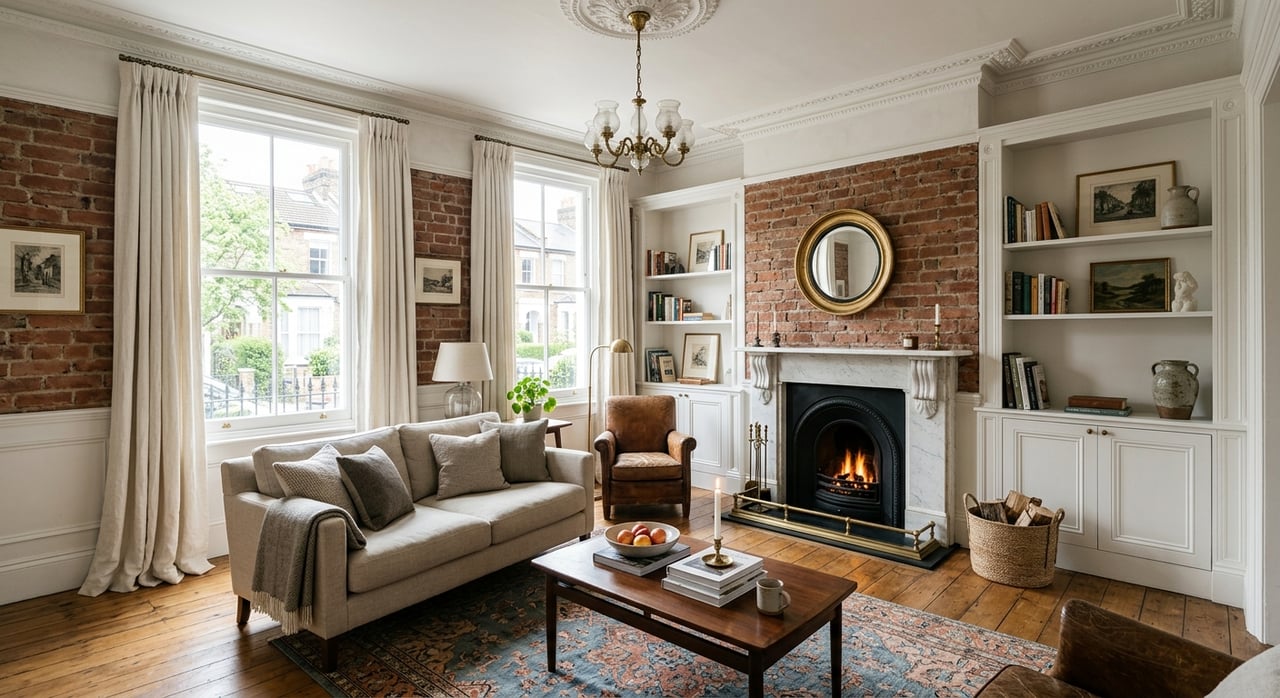
Inside the home, the most effective updates are often the simplest. Clean surfaces, fresh paint, repaired hardware, updated lighting, and less visual clutter can make original millwork, fireplaces, plaster details, and tall windows feel intentional rather than dated.
Keep interior updates light and reversible
For many Georgetown sellers, the best strategy is not a major interior renovation. It is thoughtful simplification.
Interior alterations and non-structural interior demolition are generally not subject to preservation review, unless the property has a designated historic interior. That gives you room to improve presentation without taking on a full preservation process.
In practice, that often means:
- Deep cleaning every room
- Editing furniture to improve flow
- Adding brighter, warmer lighting
- Refreshing wall paint where needed
- Repairing visible wear and tear
- Highlighting original details instead of covering them
The goal is to help buyers picture everyday living in the home while preserving the character that makes it special.
Stage for how buyers shop now
Historic homes benefit from staging because buyers need help seeing how beautiful architecture works with modern living. According to the 2025 Profile of Home Staging Snapshot from NAR, 83% of buyers’ agents said staging made it easier for buyers to visualize a property as a future home.
NAR also found that the rooms most often staged were the living room, primary bedroom, dining room, and kitchen. In a Georgetown home, those are often the same rooms where proportion, ceiling height, fireplaces, and natural light can tell the strongest story.
Simple staging usually works best here. Streamlined furnishings, cleaner sight lines, better lamps, and fewer accessories can draw attention back to original architectural features instead of competing with them.
Photos matter just as much. NAR reported that buyers place high importance on photos, physical staging, videos, and virtual tours, so the prep you do before photography can directly affect how the listing performs online.
Avoid common prep mistakes
Historic homes can lose momentum when well-intended updates cross the line from refresh to overcorrection. A few choices are especially worth avoiding.
Do not overclean masonry
Aggressive cleaning can damage historic brick or stone and create a look that feels stripped rather than cared for. Gentle methods are the safer path.
Do not replace character too quickly
Windows and doors on primary elevations often contribute to the home’s identity. Repair is usually preferred over replacement, especially when original materials can still perform well with the right work.
Do not change front-facing proportions
Altering a primary door opening or using mismatched replacement elements can disrupt the architectural balance buyers notice right away. In Georgetown, authenticity often supports value.
Do not add visible rooftop distractions
Visible equipment, decks, or poorly placed rooftop elements can create review issues and weaken the home’s historic silhouette. If roof work is part of your prep, placement matters.
Coordinate the work in the right order
The safest seller-prep workflow is straightforward: inspect first, prioritize second, and confirm permits before you commit to custom materials or photography. DC specifically encourages owners to consult HPO before filing, and Georgetown review applications are handled through HPO in coordination with the Commission of Fine Arts and the Old Georgetown Board.
That is one reason contractor experience matters so much in this neighborhood. A team that understands historic work can help you avoid delays, protect original materials, and make smart decisions about what is worth doing before you list.
If your project affects the street-facing exterior or is larger than a cosmetic refresh, plan for more time. DC notes that Georgetown review can involve active neighborhood participation, including ANC 2E and the Citizens Association of Georgetown, so early communication can make the process smoother.
Do not forget condos and co-ops
If you are selling a condo or co-op in Georgetown, exterior consistency matters at the building level too. DC’s window standards guidance strongly encourages coordination across owners and the board, especially for window replacement.
A building-wide master plan can make a big difference. Buyers are not only evaluating your unit. They are also paying attention to how well the building is maintained and whether exterior decisions feel cohesive over time.
The goal is confidence, not over-renovation
In Georgetown, the best listing prep usually does not erase age. It reduces hesitation. Buyers respond when a historic home feels well maintained, thoughtfully presented, and true to its architecture.
That is where strategy matters. With the right prep plan, you can protect the details that give your home its identity, avoid unnecessary review headaches, and present the property in a way that supports stronger interest from the start.
If you are thinking about selling a historic home and want thoughtful guidance on what is worth doing before you list, Laurie Rosen can help you create a smart, practical plan that respects the home and supports your goals.
FAQs
Can original windows stay in a Georgetown historic home before sale?
- Yes. DC guidance says historic windows on primary elevations are usually best repaired rather than replaced when repair is a reasonable option.
Can you paint brick on a Georgetown historic home?
- Paint color selection is generally exempt from preservation review, but unpainted masonry on a historic landmark is a special case and should be evaluated carefully.
Can you remodel the inside of a Georgetown historic home before listing?
- Usually yes. Interior alterations are generally not subject to preservation review unless the property has a designated historic interior.
Do Georgetown condo owners need to coordinate window replacement?
- Yes. DC strongly encourages coordination across owners and the board, and a building-wide master plan is recommended.
What rooms matter most when staging a Georgetown historic home?
- The living room, primary bedroom, dining room, and kitchen are often the highest-impact spaces, especially because buyers notice them first in photos and tours.