If you want room to breathe without feeling far from everyday essentials, Potomac often stands out right away. Many buyers are looking for that rare mix of privacy, greenery, and practical access to Bethesda, Washington, and other nearby job centers. This guide will help you understand what life in Potomac, MD actually feels like day to day, from housing patterns to parks, errands, and commuting. Let’s dive in.
What Life in Potomac Feels Like
Potomac feels more like a spacious, close-in suburban community than a dense town center. According to Census QuickFacts, the area has 47,018 residents spread across 25.13 square miles, which helps explain why it often feels open and uncrowded.
That sense of space is not accidental. Montgomery Planning describes Potomac as a subregion that grew from rural and agricultural roots into a semi-rural suburban area that still keeps a strong green character and environmental quality. In everyday terms, that means you get a setting that feels established, wooded, and residential while still staying connected to the larger region.
Why Potomac Feels So Spacious
A big reason Potomac feels different from more compact suburbs is its housing mix. Montgomery Planning’s 2024 Potomac Subregion reality check says single-family detached homes made up 74.2% of housing units in 2023, while single-family attached homes accounted for 15.9% and multifamily homes made up 9.9%.
Owner occupancy is also a major part of the area’s character. The same report says 87.7% of homes in the subregion were owner-occupied in 2021, which helps reinforce Potomac’s stable, residential feel.
Zoning also plays a major role in the amount of breathing room you notice from one street to the next. County standards include minimum lot sizes such as 2 acres in RE-2 zones, 40,000 square feet in RE-1, 20,000 square feet in R-200, and 5 acres in RC zones.
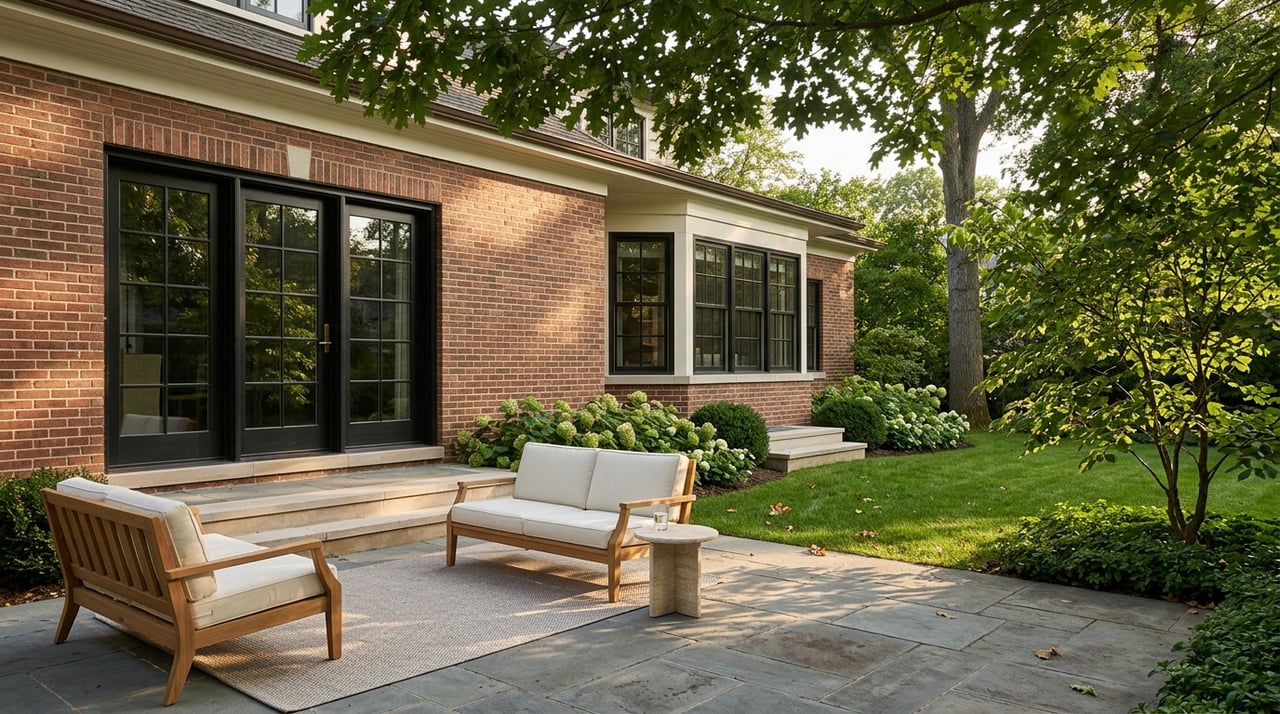
Those standards shape the experience of driving or walking through Potomac. You often see large lots, mature trees, and homes set back from the road, which creates the private, wooded, estate-like atmosphere many buyers associate with the area.
Housing Patterns and Daily Lifestyle
Potomac’s low-density layout influences more than curb appeal. It also affects how the community functions day to day, because homes, shopping areas, and open space are not packed tightly together.
That can be a real draw if you value a quieter residential setting. At the same time, it helps to know that convenience in Potomac is usually concentrated in a few well-known hubs rather than spread evenly throughout every block.
For buyers, that often means a lifestyle built around peaceful residential streets paired with planned trips to village centers, shopping areas, parks, or nearby Metro connections. If that balance sounds appealing, Potomac can feel like a very comfortable fit.
Potomac Village and Everyday Errands
Potomac Village is the commercial heart of the area, centered at Falls and River Roads. Montgomery Planning describes it as roughly 26 acres with about 337,710 square feet of shops, services, and offices.
The surrounding area is mostly residential, but the village includes many of the practical stops people rely on every week. Planning documents also note nearby uses such as a post office, library, day care center, church, and veterinary clinic.
This setup helps explain why Potomac can feel both calm and convenient. You are not in a highly urban environment, but you do have a clear local center where errands and services can be handled efficiently.
Montgomery Planning also calls for a more pedestrian-friendly mixed-use village center at a compact village scale. That vision reflects the role Potomac Village already plays as a place where retail, services, offices, and community activity come together.
Cabin John Village Adds Convenience
Cabin John Village gives residents another useful everyday hub. Its current site describes the center as a community pillar since 1967 and says it offers a mix of home goods, dining, health and wellness, and outdoor greenspace for community events.
That matters if you are trying to picture real life here, not just a map. Potomac is not a place where every need is around the corner on every street, but it also is not a place where you have to drive far for every basic errand.
Instead, daily convenience tends to come from a handful of established centers. For many buyers, that feels like a good middle ground between privacy at home and practical access when you need it.
Parks and Green Space in Potomac
One of Potomac’s strongest lifestyle advantages is its connection to parks, trails, and open space. If access to nature matters to you, this is one of the clearest reasons the area stands out.
Montgomery Parks gives Potomac a strong local network of recreational spaces. Potomac Community Neighborhood Park, next to the community center, includes a playground, a lighted baseball field, and lighted tennis courts on 5.3 acres.
Blockhouse Point Conservation Park offers a different kind of experience. At about 630 acres, it is known for forest, wetlands, streams, river-rock outcrops, wildlife, and views of the Potomac River and C&O Canal.
Cabin John Regional Park adds even more variety. It includes trails, athletic fields, picnic and playground areas, a dog park, camping, ice skating, and more than five miles of hiking and biking trails.
Access to Regional Outdoor Destinations
Potomac also benefits from being close to some of the region’s best-known natural landmarks. Great Falls Park, about 15 miles from Washington, DC, is an 800-acre National Park Service site where the Potomac River drops through steep rock and Mather Gorge.
On the Maryland side, the Billy Goat Trail at the C&O Canal National Historical Park is one of the busiest trails in the DC area. Its three sections total eight miles and are accessed from the Great Falls Tavern area in Potomac.
For many residents, these nearby destinations are part of the appeal of living here. You can enjoy a residential setting with mature trees and quiet streets, while also being close to major outdoor spaces for hiking, scenery, and weekend recreation.
Commuting From Potomac
Potomac’s setting offers privacy and green surroundings, but it is still part of the daily rhythm of the greater DC area. Census QuickFacts lists the mean travel time to work at 29.7 minutes, which suggests a commute that is not unusually short but remains manageable for a close-in suburb.
Transit access in Potomac is more feeder-based than rail-centered. Ride On Route 36 connects Bethesda Station with River Road and nearby streets such as Bradley Boulevard and Seven Locks Road.
Ride On Route 37 links Potomac Community Center with Grosvenor Station and Wheaton during weekday peak hours. In practical terms, many residents use a mix of driving and bus connections to nearby Metro stations rather than relying on dense in-town rail service.
That commuting pattern fits the broader character of the area. Potomac tends to attract people who want more room and greenery while staying within reach of Bethesda and other regional employment and retail centers.
Who Potomac May Appeal To
Potomac can be especially appealing if you are looking for a home environment that feels calm, established, and spacious. Buyers who prioritize lot size, detached housing, mature landscaping, and access to parks often find that the area delivers a lifestyle that is hard to replicate in denser neighborhoods.
It can also work well if you want everyday conveniences without giving up a more residential setting. With places like Potomac Village and Cabin John Village, daily errands and casual outings are built into the community, just in a more concentrated way.
If you are comparing Potomac with other close-in options, it often comes down to the kind of rhythm you want. Some buyers want walkable density on every corner, while others prefer a quieter home base with convenience nearby. Potomac tends to fit the second group very well.
What to Keep in Mind as a Buyer
When you explore Potomac, it helps to look beyond square footage alone. Pay attention to lot size, the distance between homes, the location of village centers, and how close you want to be to parks, commuter routes, or Metro connections.
You should also think about how you define convenience. In Potomac, convenience often means having strong amenity hubs and regional access while enjoying a more private residential setting at home.
That balance is exactly why many buyers are drawn here. Potomac offers room, greenery, and established neighborhoods, but it still keeps you connected to the everyday needs and broader opportunities of the DC region.
If you are considering a move to Potomac, having a local guide can make a real difference. With deep experience across close-in Maryland and the broader DMV, Laurie Rosen can help you evaluate neighborhoods, compare lifestyle tradeoffs, and make a smart next move.
FAQs
What is Potomac, MD known for?
- Potomac is known for its spacious residential feel, large share of single-family detached homes, mature greenery, and access to parks, trails, and village-style shopping areas.
What types of homes are common in Potomac, MD?
- According to Montgomery Planning, single-family detached homes made up 74.2% of housing units in 2023, making detached homes the dominant housing type in Potomac.
Does Potomac, MD feel rural or suburban?
- Potomac is best described as a semi-rural suburban area. Montgomery Planning says it evolved from rural and agricultural roots while still retaining strong green character and environmental quality.
Are there convenient shopping areas in Potomac, MD?
- Yes. Potomac Village serves as a main commercial center with shops, services, and offices, and Cabin John Village provides another everyday hub for dining, home goods, health and wellness, and community events.
Are there parks and trails near Potomac, MD?
- Yes. Potomac has access to local parks such as Potomac Community Neighborhood Park, Blockhouse Point Conservation Park, and Cabin John Regional Park, plus nearby regional destinations like Great Falls Park and the Billy Goat Trail.
How is the commute from Potomac, MD?
- Census QuickFacts lists the mean travel time to work at 29.7 minutes. Many commuters use a mix of driving and Ride On bus connections to nearby Metro stations such as Bethesda and Grosvenor.